Kraken’s new Solana token flow adds more assets to the app and changes what users may think the app is signaling.
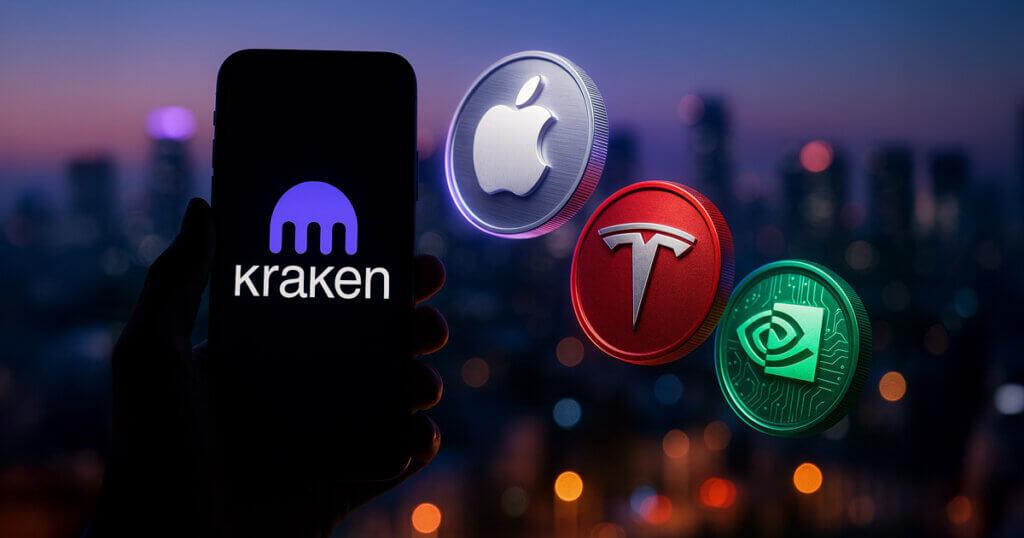
In a June 18 launch post, Kraken said eligible users in the US and more than 100 countries can trade more than 2,500 Solana-based tokens directly from the main Kraken app. The feature is built to remove the usual on-chain setup work: no separate wallet, no seed phrase, no bridge, and no app switch before a trade.
The trade-off is easy to underestimate once the assets are held in an exchange app.
Kraken still draws a line around these tokens: they are available through the app, and they remain outside the normal Kraken listing process. The company says the DEX tokens available through the feature have not been reviewed, approved, or endorsed by Kraken.
That turns the rollout into more than a product update. It is a test of whether a major exchange can package on-chain token access for retail users while users can still mistake DEX execution and early-stage token risk for exchange-vetted risk.
One side is the familiar centralized exchange interface, where users expect account balances, portfolio views, fiat rails, and customer support. The other is on-chain token trading, where execution, liquidity, slippage, custody, and token quality can sit much closer to the user.
A CEX surface for DEX execution
Kraken’s launch post says users can buy and sell supported Solana DEX tokens with USD or USDC, and that on-chain holdings will appear in the Kraken portfolio view. Kraken’s product page and FAQ add the mechanics: the trading flow uses Solana DEX protocols, Privy-powered embedded wallets, Jupiter quotes, and a slippage cap.
The FAQ describes DEX purchases through USDC, typical settlement in under a minute, a 1% Kraken technology fee, and a 3% slippage limit.
The setup is meant to make the hard parts disappear from view. A user can stay in the exchange app, view balances on a familiar portfolio screen, and avoid creating a separate wallet before their first trade.
Privy’s embedded wallet documentation describes self-custodial wallets that can be built inside apps. Solana DEX routing and Jupiter token data are hidden beneath the Kraken interface.
The result is a hybrid model: an exchange account experience with on-chain routing underneath.
| What feels familiar | What remains on-chain |
|---|---|
| Tokens appear inside the Kraken app | The assets are Solana DEX tokens, outside the normal Kraken listing process |
| Trades can be initiated from an exchange account experience | Execution depends on DEX liquidity, quotes, fees, and slippage |
| Holdings appear in the Kraken portfolio view | The setup is described as self-custodial or non-custodial |
| Token discovery is presented through a polished app | Kraken says the DEX tokens are not reviewed, approved, or endorsed by Kraken |
The removed friction is a selling point. It is also a risk signal. A polished app can make long-tail token access feel safer even when the token review boundary has not moved.
Verified does not mean Kraken-listed
A “Verified” tag is doing some heavy work in the rollout. Kraken says the app gives access to more than 2,500 verified Solana-based tokens at launch.
Its product page also points to Jupiter’s VRFD token list, and Jupiter’s token documentation describes a data layer for token metadata, verification status, liquidity, market data, and trust signals.
In that setup, verification signals token data and discovery status rather than Kraken listing approval, custody review, investment assessment, or legal review.
Kraken’s own language keeps the boundary in place. The company says tokens available through DEX trading sit outside Kraken review, approval, or endorsement.
Its support page frames the wallet setup as non-custodial and adds mechanics around quotes, settlement, slippage, and fees. Those details tell users that the app simplifies access while stopping short of the role a centralized listing desk typically plays.
For retail users, that distinction can be easy to miss. A token found through a self-directed wallet or DEX aggregator carries one set of expectations. A token shown inside a major exchange app may carry another, even when the legal and product disclosures say otherwise.
That is where the rollout becomes about distribution. Centralized exchanges have spent years building trust around login screens, balances, compliance checks, fiat access, and customer support. DeFi has spent years pushing users toward open markets where asset choice is broader, but mistakes can be expensive.
Kraken’s app now sits between those worlds.
If the interface works, it provides users with a faster path to long-tail Solana assets, including early-stage tokens that may never pass through a traditional centralized listing process.
If the interface fails to meet user expectations, Kraken’s disclosure record will matter less than the user expectations created by a familiar trading surface.
Solana and USDC supply the rails
The rollout is also specific to market structure. It starts with Solana, a chain built around high-throughput, low-cost activity, and it leans on USDC as a dollar-denominated trading asset.
SOL and USDC are among the top crypto assets by market capitalization, with the Solana page showing $1.7 billion in 24-hour trading volume and the USDC page showing the stablecoin trading at $1.
The numbers help explain the choice of rails. Solana supplies a live token environment. USDC supplies a dollar-like unit that traders already use across exchanges, wallets, and DeFi venues.
For users, the design reduces setup work and pushes attention toward the trade itself. A user who already holds dollars or USDC in an exchange app can discover a broader set of Solana tokens before learning a separate wallet flow.
The cost is that the line between convenience and responsibility becomes harder to see.
The support-page details reinforce that trade-off. A slippage cap can limit one class of execution risk. Jupiter quotes can improve price discovery. A portfolio view can make holdings easier to track.
Those safeguards address execution mechanics while leaving open questions about token quality. Durability of liquidity, team credibility, distribution, and demand remain outside the app wrapper, and Kraken’s disclaimer leaves those questions with users.
The stablecoin detail is also important. Kraken’s launch post lists trades in USD or USDC, while the FAQ explains DEX purchases using USDC mechanics. The difference can affect user expectations because the product may feel fiat-connected at the surface while routing through stablecoin and wallet mechanics below it.
What Kraken is really testing
Kraken likely wants more on-chain activity inside its app. The launch tests whether centralized exchanges can distribute decentralized markets without shouldering the full trust burden that usually accompanies exchange listings.
If users accept the distinction, exchanges may compete by offering guided access to large token universes as much as by adding a small set of listed assets.
The exchange becomes the front door, while the token list, quote source, embedded wallet, and DEX execution layer do the work behind it.
The risk is that retail behavior does not always follow product architecture. Users may see a token in Kraken and assume Kraken’s brand has done more work than the disclosures promise.
Complaints after poor fills, illiquid trades, scams, or collapsing tokens could test how much users understood about the difference between exchange access and exchange approval.
The next signal will come from how Kraken surfaces risk at the point of trade, how users respond after the first wave of app-based DEX activity, and whether the model expands beyond Solana. The launch shows that a centralized exchange can make on-chain access to tokens feel much easier.
It leaves open whether the risks have become easier to understand.
The post Kraken adds 2,500 unapproved Solana tokens to its app – says risk stays on-chain appeared first on CryptoSlate.